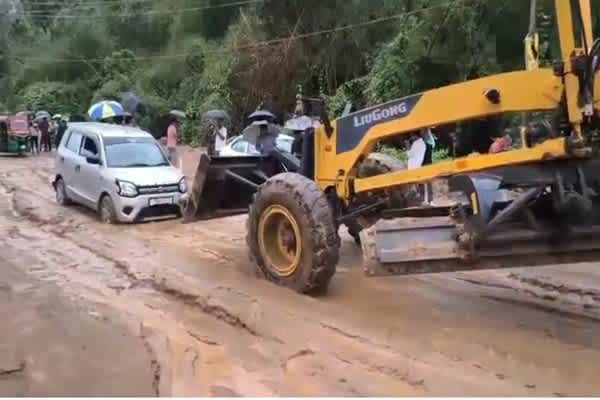
Continuous rainfall has brought traffic along the Agartala–Khowai National Highway to a near standstill, leaving large stretches submerged and severely damaged. The vital road link has been reduced to slushy, mud-filled patches, making it extremely difficult for vehicles to pass. In several of the worst-affected sections, authorities were forced to deploy dredgers to help stranded vehicles navigate through waterlogged areas.
The situation worsened as deep potholes, aggravated by relentless rain, turned into dangerous traps for commuters. Trucks carrying essential commodities and passenger vehicles were stuck for hours, unable to move through the treacherous terrain. By early morning, long queues of vehicles had formed on both sides of the highway, creating a massive traffic jam and disrupting the movement of goods and people.
Stranded passengers expressed frustration and distress over the lack of immediate relief. Many reported waiting for hours in adverse conditions without access to food, shelter, or clear information about when the road would be reopened. “We have been stuck here since last night. There is no proper help, and the rain is making things worse,” said a commuter, highlighting the ordeal faced by travelers.
Officials have acknowledged the seriousness of the situation and stated that emergency efforts are underway to restore normal traffic movement. Teams have been deployed to clear water, repair damaged sections, and assist stranded vehicles. However, the scale of destruction has made restoration a challenging task.
The incident has once again exposed the fragile condition of key highways in Tripura, where even moderate rainfall can severely disrupt connectivity. Concerns are mounting over the state’s preparedness ahead of the monsoon season, with experts and citizens alike calling for durable and weather-resilient infrastructure.
For now, the Agartala–Khowai highway, a crucial lifeline for the region, remains crippled—serving as a stark reminder of the urgent need for long-term repairs, better planning, and stronger road networks capable of withstanding extreme weather conditions.