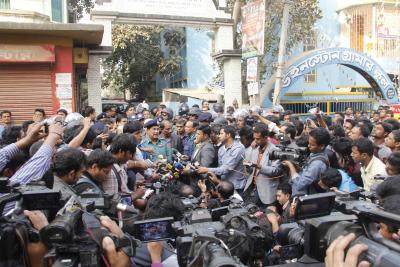
Dhaka, Jan 22: Bangladesh’s interim government, led by Muhammad Yunus, has been accused of curbing press freedom by using anti-terror laws to arrest journalists, a report highlighted on Thursday. According to Rights and Risks Analysis Group, a New Delhi-based think tank, this practice has resulted in prolonged pre-trial detention on “extraordinary” and sometimes “outlandish” charges, including murder.
By December 2025, the report said, the Yunus-led administration had targeted 640 journalists through a combination of criminal prosecutions, financial investigations, and physical intimidation. High-profile cases include Dhaka-based journalist Anis Alamgir, arrested on December 14, who remains in custody facing anti-terrorism charges for critiquing government policies on social media. Similarly, journalist Monjurul Alam Panna was charged for participating in a constitutional law discussion on August 28, an act widely recognised internationally as protected political speech.
Despite these reports, Yunus’ Press Secretary, Shafiqul Alam, insisted that “there has not been a single instance in which a journalist has been prosecuted for criticising this government” and claimed, “you are free to write anything.”
The report describes a phenomenon called “weaponised legalism,” where governments exploit legislation to criminalise journalism under the guise of legal procedure. Bangladesh’s Anti-Terrorism Act exemplifies this approach, allowing indefinite detention without judicial warrant, custodial interrogation up to 24 days, and convictions carrying life sentences. The law broadly defines terrorism as any act “intended to cause fear or insecurity in the public” or “to destabilise” government operations, leaving journalists vulnerable.
The climate of fear has led many journalists to self-censor. A Dhaka newsroom chief, speaking anonymously to The Diplomat, said reporters feel “scared and unsafe to criticise the government” and are purposely limiting coverage to survive. Tensions escalated in December when far-right mobs attacked and set ablaze the offices of major newspapers The Daily Star and Prothom Alo, labelling them “pro-India” and “pro-Hasina,” further heightening concerns about press freedom in Bangladesh.