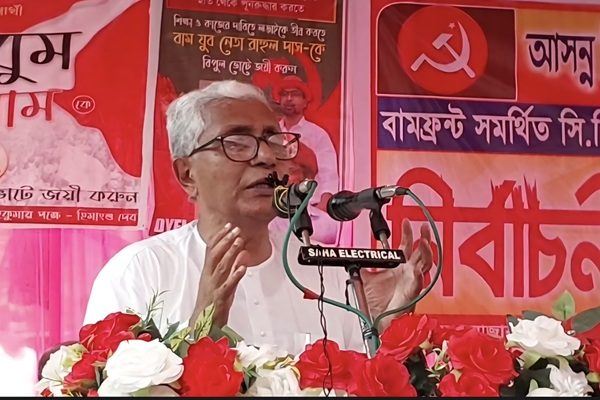
Veteran CPI(M) leader and former Tripura Chief Minister Manik Sarkar on Sunday claimed that the party is witnessing a resurgence of public support ahead of the Tripura Tribal Areas Autonomous District Council (TTAADC) elections, with people now voluntarily contributing to its campaign.
Addressing a party meeting at Manu in the Longtharai Valley subdivision, Sarkar said the feedback from the grassroots level has been encouraging. He noted a significant shift in public attitude, stating that people who had once distanced themselves from Left leaders are now welcoming CPI(M) candidates warmly.
“People are sharing their bitter experiences with the present administration and are voluntarily donating to support our candidates,” he said, expressing confidence in the party’s prospects in the upcoming polls.
Sarkar also launched a sharp attack on both the BJP and Tipra Motha, alleging that the two parties had worked together to dislodge the Left Front from power in 2021. Questioning their current political stance, he remarked that while they accuse each other of non-performance, “in reality, both forces have failed to deliver.”
Criticising the functioning of the present ADC administration, Sarkar said it had failed to meet public expectations. Referring indirectly to Tipra Motha’s leadership, he said people had initially placed their trust in promises of change, but the reality has been disappointing.
The senior CPI(M) leader further raised concerns over unemployment in the TTAADC areas, claiming that a large number of youths have been forced to migrate outside the state in search of livelihood. “Nearly one lakh young people from these areas are now working outside due to lack of opportunities at home,” he said, contrasting it with the Left Front’s tenure, which he claimed ensured employment availability.
Sarkar also highlighted the historical context behind the formation of the TTAADC and paid tribute to leaders like Dasarath Deb for their role in safeguarding tribal rights. He urged the younger generation to revisit this history to better understand the struggles and sacrifices made to secure constitutional protections for tribal communities.