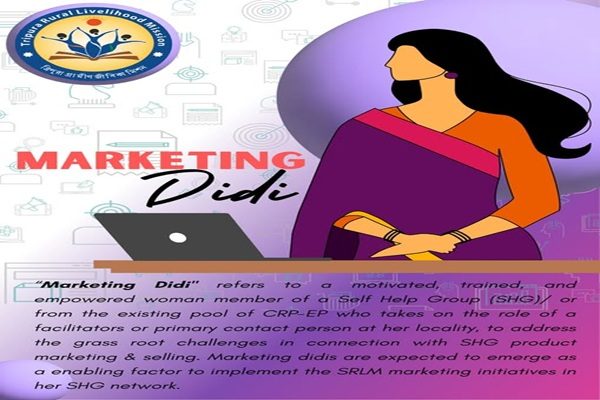
Tripura has become one of the first states in the country to introduce its own Marketing Didi Policy, a pioneering initiative aimed at strengthening market linkages and expanding economic opportunities for women-led enterprises across rural areas. The policy, adopted around a month ago by the Tripura Rural Livelihood Mission (TRLM), marks a significant step toward empowering self-help group (SHG) members, popularly known as “didis,” by enabling better access to markets and sustainable income generation.
According to officials, the Marketing Didi Policy has been designed to bridge the long-standing gap between production and market demand faced by rural women entrepreneurs. The policy focuses on building strong and recognizable brand identities for locally produced goods, thereby enhancing their competitiveness in both traditional and digital marketplaces. Special emphasis has been placed on expanding outreach through e-commerce platforms, allowing SHG products to reach consumers far beyond local and regional boundaries.
Under the policy framework, women’s collectives will receive structured support in areas such as branding, packaging, quality control, digital marketing, and logistics. Training programs and capacity-building initiatives will be conducted to equip women entrepreneurs with the skills required to navigate modern market systems. The policy also aims to provide access to necessary infrastructure and institutional support, ensuring that SHGs can operate efficiently and sustainably.
TRLM officials noted that the initiative is expected to significantly boost income levels among women-led self-help groups while simultaneously promoting indigenous products, traditional crafts, and locally manufactured goods. By connecting rural producers to wider consumer networks, the policy is set to strengthen Tripura’s rural economy and encourage entrepreneurship at the grassroots level.
The Marketing Didi Policy is also seen as a model for integrating women’s empowerment with structured market access. By enabling women to participate in national and even global supply chains through digital platforms, the initiative aligns with broader goals of inclusive and sustainable development.
With this forward-looking policy, the Tripura government has reaffirmed its commitment to placing women at the center of economic growth, setting a benchmark for other states to follow in fostering rural entrepreneurship and empowerment.