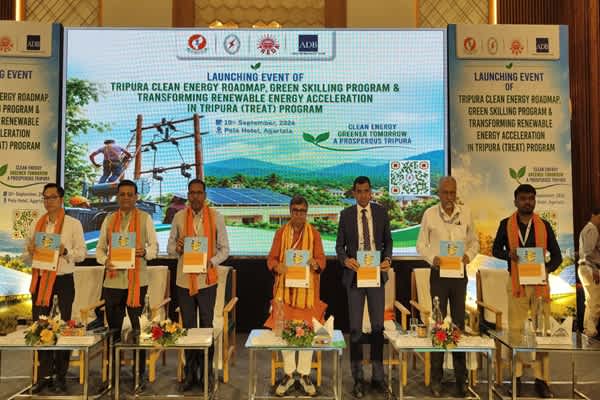
Agartala, September 10: Tripura is set to undertake a major transformation of its power sector, combining renewable-energy expansion with a large-scale upgrade of the electricity distribution network as the state prepares for a projected 800 MW demand by 2035.
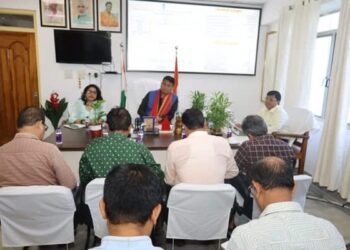
The government on Thursday introduced the Tripura Clean Energy Roadmap 2035, Unnayan Green Skilling Programme and TREAT (Transforming Renewable Energy Acceleration in Tripura), outlining measures aimed at improving energy security and creating employment in the emerging green economy.
A key component of the planned infrastructure upgrade is the underground conversion of the electricity distribution network across the Agartala Municipal Corporation area. Power Minister Ratan Lal Nath said the project would involve an investment of more than Rs 1,500 crore.
According to Nath, tenders have already been finalised and work orders issued. The project is expected to commence after the elections, following a Bhumi Puja in the presence of Chief Minister Dr Manik Saha.
Addressing the launch programme, Nath said dependable electricity was indispensable for the state’s development, particularly for industry, healthcare and education. He also stressed that renewable-energy expansion would require a trained technical workforce capable of maintaining the new infrastructure.
More than 1,000 people are proposed to be trained under the Unnayan programme. ITI graduates, Class XII pass-outs, self-help group members, diploma engineers and technicians will be among those covered.
Nath said the state needed skilled personnel to maintain solar installations as the renewable-energy footprint expands. He also highlighted Tripura’s current electricity position, stating that the state was meeting its own requirements while exporting power to Bangladesh.
ADB Principal Energy Specialist James Kolantharaj said the clean-energy roadmap was designed to link renewable-energy development with energy security and green employment. He stressed the importance of ensuring that youth, women, farmers, communities and entrepreneurs benefit from the transition.
TSECL Managing Director Biswajit Basu said current power demand in Tripura stands at around 380 MW and is expected to rise to 520 MW by 2030 and 800 MW by 2035.
To meet future requirements, the state is examining a range of projects, including rooftop and floating solar, battery energy storage, hydrokinetic systems and rehabilitation of hydropower projects. An 800 MW hydro pumped-storage project is also under consideration, along with the potential development of green hydrogen.
Basu said Agartala’s distribution network would be modernised through a smart-grid architecture involving underground cabling, GIS substations, SCADA and optical-fibre communication.
The event also featured the felicitation of three companies associated with PM-SGMBY and PM-KUSUM for their contribution to renewable-energy development in Tripura.