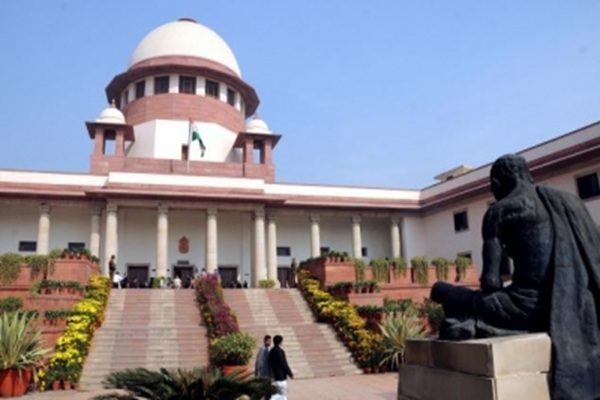
New Delhi, Jan 29 — The Supreme Court on Thursday issued an interim order staying the operation of the University Grants Commission (Promotion of Equity in Higher Education Institutions) Regulations, 2026, directing that the earlier 2012 Regulations will continue to govern the sector until further orders. The order was passed by a bench comprising Chief Justice of India Surya Kant and Justice Joymalya Bagchi.
The interim order follows a batch of writ petitions challenging the validity of the 2026 Regulations, particularly Clause 3(c), which defines “caste-based discrimination.” The apex court noted prima facie that “some provisions of the Impugned Regulations suffer from certain ambiguities, and the possibility of their misuse cannot be ruled out.”
Petitioners argued that the 2026 definition of caste-based discrimination is restrictive and exclusionary, leaving individuals from general or non-reserved categories without any remedy, even if they face caste-based discrimination or institutional bias in higher education institutions. The Supreme Court highlighted their submission that the regulations operate on the presumption that caste-based discrimination is unidirectional and cannot affect non-reserved categories.
The bench framed several substantial questions for further consideration, including whether Clause 3(c) bears a reasonable and rational nexus with the objectives of the 2026 Regulations, especially as no separate procedural mechanism has been prescribed for addressing caste-based discrimination, unlike the broader definition of “discrimination” under Clause 3(e).
The court also raised concerns over Clause 7(d), which refers to “segregation” in hostels, classrooms, or mentorship groups, noting potential violations of Articles 14 and 15 of the Constitution under the “separate yet equal” principle. Additionally, the omission of “ragging” as a specific form of discrimination in the 2026 framework, despite its inclusion in 2012 Regulations, was flagged as a possible regressive and exclusionary legislative omission, potentially violating Articles 14 and 21.
The Supreme Court directed that the 2026 Regulations be kept in abeyance, and the 2012 Regulations will continue to operate in the interim. The matter is listed for further hearing on March 19, 2026.