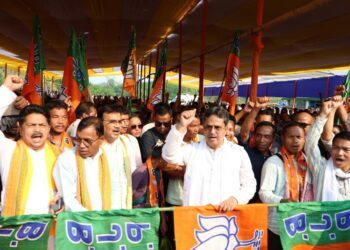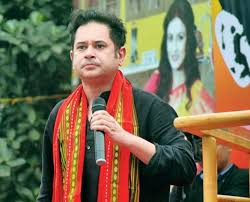
The long-running debate over the use of Roman script for the Kokborok language has once again resurfaced in Tripura, sparked by a sharp response from Tipra Motha chief Pradyot Kishore Deb Barma. His remarks came after senior BJP leaders, during a joining rally organised by the BJP’s Janajati Morcha in front of Rabindra Bhavan, questioned the relevance and appropriateness of the Roman script for Kokborok.
In a strongly worded video message, Pradyot criticised the BJP leadership for portraying the Roman script as “foreign” and a symbol of “colonial influence.” He argued that such claims undermine the cultural agency of the indigenous Tiprasa people, who, according to him, alone possess the rightful authority to choose the script for their language. Pradyot asserted that political leaders who do not speak Kokborok should refrain from dictating what script the community should use.
Calling out what he described as “double standards,” Pradyot urged BJP leaders to reflect on their own practices. “If you oppose Roman script, then stop sending your children to English-medium schools,” he remarked, highlighting what he sees as an inconsistency between their public statements and private choices. He said that dismissing the Roman script while embracing English education amounted to hypocrisy.
To strengthen his argument, Pradyot pointed to neighbouring Assam, a BJP-ruled state, where the Roman script has already been recognised for certain indigenous languages. This, he said, underscores that acceptance of Roman script is neither unprecedented nor politically incompatible with BJP governance. He insisted that adopting Roman script for Kokborok is not an act of defiance but a cultural decision rooted in practicality and community preference.
Pradyot clarified that he harbours no hostility toward the Bengali script, emphasising that his stance is not a rejection of any particular script but a defence of the Tiprasa people’s linguistic rights. According to him, the demand for Roman script stems from the lived experiences of Kokborok speakers, many of whom find it more accessible and better suited for capturing the phonetic nuances of the language.
He reiterated that linguistic identity cannot be dictated from political platforms and should emerge organically from within the community. For Pradyot, the issue goes beyond scripts—it is about autonomy, cultural preservation, and respect for indigenous voices. As debates over Kokborok’s script continue to intensify, his comments have once again brought the cultural aspirations of Tripura’s indigenous communities into sharp focus.