Agartala, April 28 — Just an hour of intense rainfall was enough to expose the fragility of Agartala’s much-touted “smart” infrastructure, as large parts of the city were submerged by Tuesday morning.
Knee-deep water inundated major roads, marketplaces, and low-lying residential areas, bringing daily life to a grinding halt. Office-goers waded through flooded streets, schoolchildren struggled to reach classrooms, and traders were left counting losses as water entered shops and disrupted business operations.
The sudden downpour triggered widespread traffic chaos, with long snarls reported across key junctions. Several vehicles broke down mid-road, leaving commuters stranded and adding to the disorder. What should have been a routine morning quickly turned into a citywide crisis.
Residents expressed frustration over what they described as a recurring failure of the drainage system. Many questioned the effectiveness of the Smart City project, alleging that the ground reality does not match official claims. “This happens every monsoon. Nothing has changed despite all the promises,” said a local resident, echoing a sentiment widely shared across affected neighborhoods.
Citizens pointed to clogged drains, poor maintenance, and inadequate planning as the primary causes of the flooding. Calls for immediate and long-term drainage reforms have grown louder, with locals demanding accountability and swift action from civic authorities.
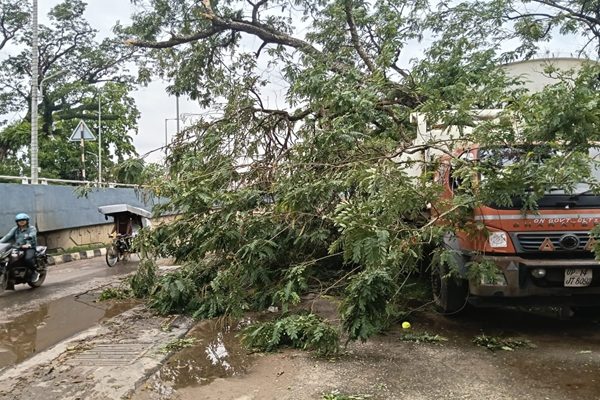
Meanwhile, the Meteorological Department has issued a fresh warning, forecasting thunderstorms, heavy to very heavy rainfall, and gusty winds reaching speeds of up to 80 km/h over the next three days. The alert has heightened concerns among residents already grappling with the aftermath of the latest flooding.
Authorities have stated that they are closely monitoring the situation and are prepared to respond to emergencies. However, with more rain predicted, the focus is now on preventive measures to avoid a repeat of the chaos.
As Agartala braces for further downpours, the incident has reignited debate over urban planning and infrastructure resilience, raising critical questions about whether the city is equipped to handle extreme weather events.