Tripura State Electricity Corporation Limited (TSECL) officials announced on Wednesday that 740 consumers have successfully generated surplus electricity through rooftop solar panels installed under the central government’s flagship PM Surya Ghar Muft Bijli Yojana, earning additional income by selling excess power back to the grid.
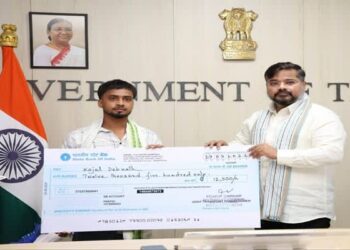
TSECL Managing Director Biswajit Basu shared that all 740 households produced more electricity than their domestic consumption over the past three months. As a result, none of these consumers incurred any electricity charges during the quarter. Instead, a total payment of Rs 2,64,331.94 was credited to their bank accounts on Wednesday for the surplus electricity supplied to the grid through the net metering mechanism. Under this system, excess power generated is adjusted against consumption and compensated as per prescribed norms.
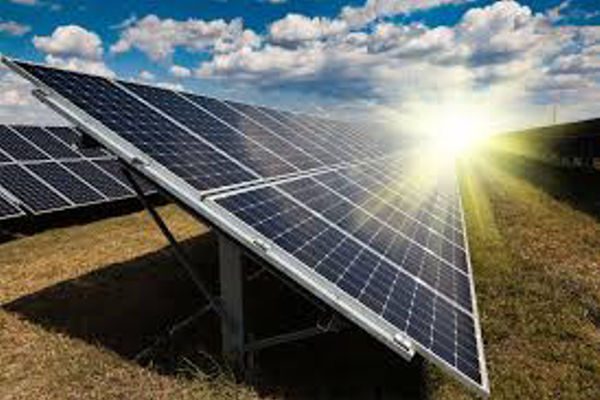
Basu highlighted that the scheme allows households to transition from being mere consumers to small-scale power producers, promoting renewable energy generation at the household level. The programme permits installation of solar panels on rooftops, tin sheds, or ground-mounted structures, expanding accessibility for households without concrete roofs and increasing participation across urban and semi-urban areas.
Power Minister Ratan Lal Nath has emphasized that solar energy is crucial for reducing dependence on conventional sources like coal and gas. The scheme not only helps households save on electricity bills but also incentivizes green energy adoption.
The Tripura government has set a target of covering 50,000 families by 2027, with the programme being implemented from the 2023–24 financial year through 2026–27. At the national level, the initiative entails a total expenditure of Rs 75,021 crore, with residential consumers receiving subsidies to encourage uptake: Rs 33,000 per kilowatt for the first 2 kilowatts of installed capacity, and an additional Rs 19,800 for the next 1 kilowatt, allowing a maximum subsidy of Rs 85,800 for up to 3 kilowatts.
Officials expect the number of beneficiaries to grow in the coming months as awareness rises and installation capacity improves, marking a significant step toward sustainable energy adoption and financial benefits for households in Tripura.