Islamabad, Dec 1 — Once viewed as a rising mid-tier nation in South Asia, Pakistan now finds itself stuck in the low human development bracket, trapped in what experts call an “illusion of growth,” according to the UNDP Human Development Report 2025.
The report places Pakistan at 168th out of 193 countries, with a Human Development Index (HDI) of 0.544—a figure only marginally above countries recovering from conflict. When adjusted for inequality, the HDI drops sharply to 0.364, underscoring deep structural inequities. The findings, highlighted by Pakistan Today, paint a grim picture of a state celebrating economic revival while its citizens face worsening deprivation.
“The irony is tragic,” the report notes. “Behind every fraction lies a child out of school, a mother who dies giving birth, a graduate unable to find work, or a citizen who cannot afford medicine.” Key indicators—life expectancy at 67.6 years, expected schooling of 7.9 years, and mean schooling of 4.3 years—reflect the persistent failure to convert potential into real progress. Even the Gross National Income per capita, at USD 5,501, shows an economy struggling to create opportunities.
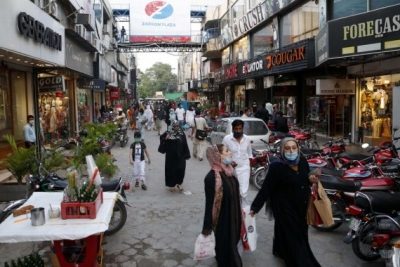
Parallel assessments by the World Bank echo these concerns. Pakistan’s major cities, once expected to drive innovation, are now hampered by collapsing infrastructure, polluted air, rising housing shortages, and severe water scarcity. Mismanaged urban governance has widened inequality, further separating the privileged from the underserved.
The IMF’s 2025 review adds to the sobering narrative. From 2000 to 2022, average per-capita GDP growth was only 1.9%, slowed by weak investments in human and physical capital and declining productivity. The IMF concluded that Pakistan has “built an economy without building its people.”
Compounding economic fragility, climate disasters—especially the 2022 floods—have erased years of social progress. The World Bank ranks Pakistan among the lowest globally in public investment efficiency, amplifying the vulnerability of its poorest citizens.
The report warns that Pakistan’s fixation on GDP masks the erosion of its human foundations, urging a shift toward policies that prioritize people over statistics.