Kabul, Dec 4:
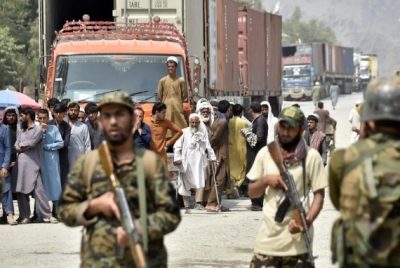
The Taliban administration in Afghanistan has reiterated that trade routes with Pakistan will be reopened only after receiving strong and credible assurances from Islamabad. The clarification came on Thursday through a statement shared on X by Taliban spokesperson Zabihullah Mujahid, who accused Pakistan of “illegally blocking” trade and transit routes to exert political and economic pressure.
Mujahid said that Pakistan’s decision to shut the routes caused significant losses on both sides of the Durand Line. “The Islamic Emirate of Afghanistan once again reiterates its position regarding the opening of trade routes with Pakistan,” he posted. He added that Afghanistan now imports essential goods from “numerous other countries,” reducing its reliance on Pakistan.
He emphasised that the Taliban will only allow the reopening of routes after Islamabad provides assurance that they will not be closed again for political reasons, “illegal use,” or pressure tactics. The Taliban seeks a mutually respectful trade environment that protects the rights of traders and the public in both countries.
The statement followed Pakistan’s announcement that it has reopened the Torkham and Chaman border crossings solely for UN humanitarian aid, local media reported.
Relations worsened in October when Pakistan shut all trade routes with Afghanistan after cross-border military skirmishes along the Durand Line. In response, Afghan forces also carried out retaliatory attacks. Following the closure, Afghanistan’s Deputy Prime Minister for Economic Affairs Mullah Abdul Ghani Baradar advised traders to shift to alternative trade corridors.
Meanwhile, Afghanistan’s Foreign Minister Amir Khan Muttaqi accused Pakistan of attempting to impose “mysterious projects” on Kabul and using economic pressure, political leverage and border closures to destabilise the Taliban administration. He claimed Pakistan expected Afghans to turn against the Taliban, but essential supplies continued uninterrupted through other regional partners.
Muttaqi further criticised Pakistan’s security demands as “unrealistic,” stating that Afghanistan has already addressed key concerns by relocating Waziristani families and strengthening border deployments. He also blamed Pakistan’s divided civil–military decision-making structure for complicating bilateral negotiations.