Agartala, December 15:
Tripura Chief Minister Dr. Manik Saha’s recent remarks opposing the use of Roman script for the Kokborok language have sparked a major political storm within the ruling NDA alliance, escalating tensions ahead of the crucial Tripura Tribal Areas Autonomous District Council (TTAADC) elections.
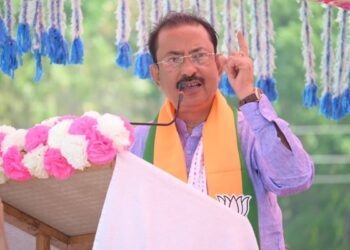
The controversy began after Dr. Saha, during a mass joining programme in Agartala, stated that his government did not support adopting the Roman script for Kokborok. He further suggested that Kokborok-speaking intellectuals could consider developing a new script, similar to the Chakma community. His comments have drawn sharp criticism from tribal allies, who view them as insensitive to long-standing cultural aspirations.
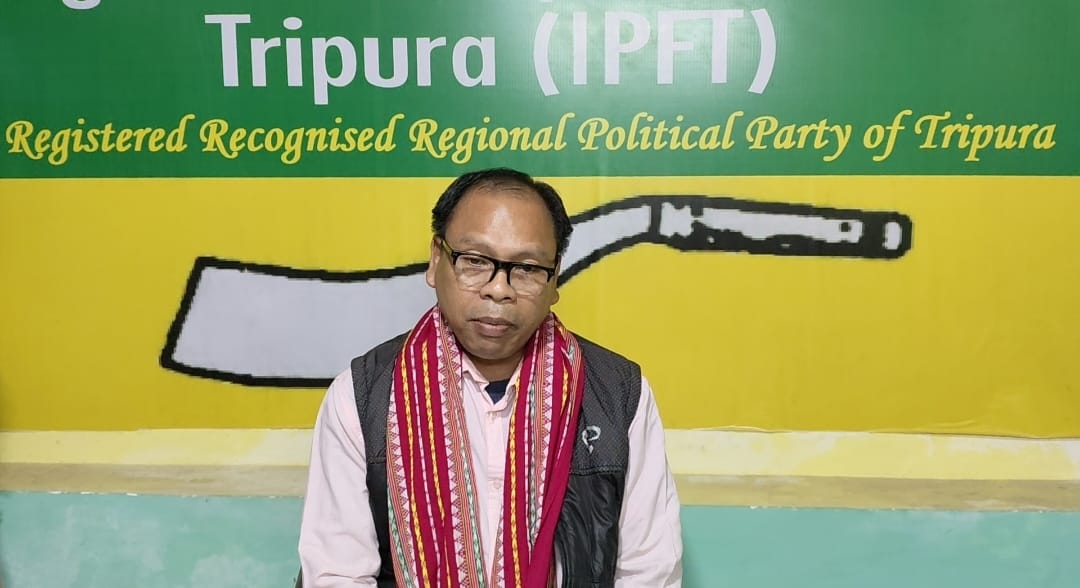
Two days after Tipra Motha condemned the remarks, the Indigenous People’s Front of Tripura (IPFT)—another key BJP ally—demanded a formal apology. IPFT general secretary Swapan Debbarma accused the Chief Minister of lacking awareness about the historic Kokborok movement, noting that the demand for Roman script is not new but dates back to 1967, when the Tripura Upajati Juba Samiti (TUJS) first raised it.
Debbarma argued that the demand represents the collective voice of the Tiprasa community, not just of individual parties. He said Dr. Saha’s statement had hurt tribal sentiments and undermined a decades-long struggle. “If he is not in favour of Roman script, he should have remained silent. He is the Chief Minister of the entire state, not of one party,” he asserted.
Issuing a stern political warning, Debbarma added that while Dr. Saha may resist legal recognition of Roman script during his tenure, “some other Chief Minister will surely do it,” emphasising political impermanence.
With both Tipra Motha and IPFT expressing open resentment, the issue has acquired significant political weight. As Pradyot Kishore Debbarma pushes for broader tribal unity under his ‘Thansa’ appeal, the rift raises questions about whether the BJP’s stance will strengthen its non-tribal support base or drive its tribal partners closer together—potentially reshaping the upcoming TTAADC electoral landscape.