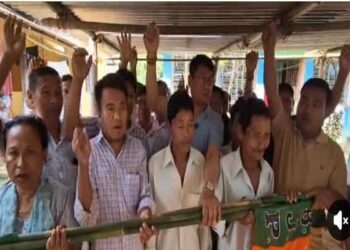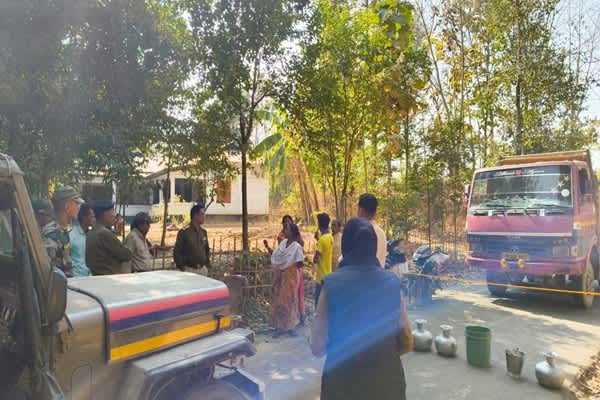
Women residents of Saraspur Gram Panchayat’s Ward No. 2 under Kadamtala block in North Tripura on Tuesday staged a road blockade, demanding immediate access to safe and regular drinking water. The protest began around 10 a.m. when a large number of local women, joined by other villagers, gathered on the main road connecting Kadamtala to Sarala, carrying buckets, pitchers, and water containers to highlight their hardship.
The protesters alleged that the area has been suffering from an acute drinking water crisis for a long time. According to them, the existing water supply system has remained largely dysfunctional, forcing residents—especially women—to struggle daily to collect water from distant or unreliable sources. Despite repeated complaints and appeals to the local gram panchayat and the pump operator entrusted with maintaining water supply, no permanent or effective solution has been implemented.
Villagers accused the pump operator of neglecting his duties and responding to complaints with excuses rather than action. They also expressed resentment over what they described as administrative apathy, claiming that their grievances have been ignored for months.
The road blockade, which continued for nearly two hours, caused significant disruption to vehicular movement along the busy route. Commuters and transport vehicles were forced to halt as protesters demanded the immediate intervention of authorities. The agitators further alleged that during the protest, no officials from the concerned department or elected local representatives came to the spot to address the issue.
Later, personnel from Kadamtala Police Station arrived at the scene and initiated discussions with the protesters. After police assured them that the matter would be taken up urgently with the concerned authorities and that steps would be taken for an early resolution, the villagers agreed to withdraw the blockade.
However, residents issued a clear warning that if their demand for clean and adequate drinking water is not fulfilled soon, they would intensify their agitation. The protest underscores growing frustration among rural communities over basic civic amenities and access to essential resources.