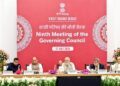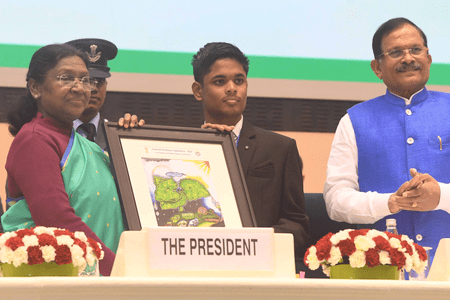
New Delhi, Dec 14 — President Droupadi Murmu on Sunday stressed the urgent need for adopting energy-efficient practices, calling energy conservation “not just an option, but the most crucial need of today.” She was speaking at the National Energy Conservation Day event, where she presented the National Energy Conservation Awards 2025 and prizes for the National Painting Competition on Energy Conservation.
Describing energy conservation as the most environmentally friendly and reliable source of energy, the President said that saving energy goes beyond reducing usage — it requires using resources “wisely, responsibly, and efficiently.” She urged citizens to embrace simple habits such as avoiding unnecessary use of electrical appliances, choosing energy-efficient devices, maximizing natural light and ventilation, and adopting solar and other renewable energy solutions to significantly cut carbon emissions.
Murmu highlighted that energy conservation is vital for ensuring clean air, secure water sources, and a stable ecosystem. “Every unit of energy we save will be a symbol of our responsibility towards nature and our sensitivity towards future generations,” she said, adding that awareness among children and youth is essential for meeting national energy goals.
The President noted that access to affordable, clean energy strengthens local economies and opens new growth avenues. Green energy, she said, is not limited to power generation but is also a tool for empowerment and inclusive development.
She expressed satisfaction with government initiatives such as the Pradhan Mantri Surya Ghar Muft Bijli Yojana and the National Green Hydrogen Mission, both aimed at reducing India’s dependence on fossil fuels. She also pointed to measures like the Renewable Consumption Obligation and Production Linked Incentive (PLI) schemes that promote renewable energy adoption and efficiency.
Citing official data, Murmu said India saved 53.60 million tonnes of oil equivalent in 2023–24 through efficiency measures, contributing to major economic gains and lower carbon emissions. She emphasised that India’s energy transition requires participation from all sectors, along with behavioural change, rooted in the cultural ethos of living in harmony with nature — the core of the “Lifestyle for Environment (LiFE)” message.