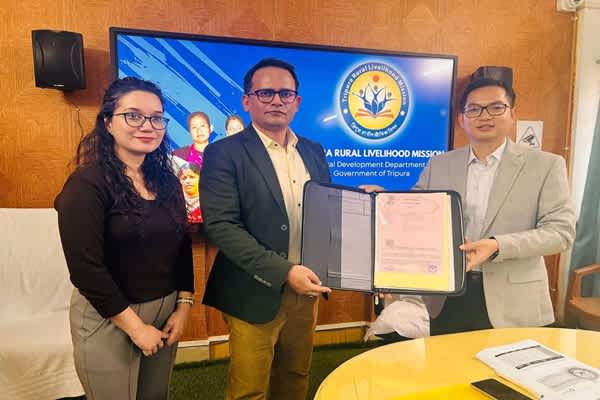
In a significant move towards strengthening community health and nutrition outcomes in rural Tripura, the Tripura Rural Livelihood Mission (TRLM) has signed a Memorandum of Understanding (MoU) with Integra Ventures Services Pvt. Ltd to conduct a comprehensive baseline survey on Food, Nutrition, Health and WASH (FNHW) interventions. The agreement was formalised on January 16, 2026, marking an important step in evidence-based planning under TRLM.
The baseline survey will be conducted across immersion sites under TRLM and will place special emphasis on vulnerable population groups, including pregnant women, children below two years of age, and adolescent girls. These groups are considered most at risk of malnutrition and health-related challenges, and the findings of the survey are expected to guide targeted and effective interventions.
The MoU was signed by Tarit Kanti Chakma, IAS, Chief Executive Officer of TRLM, on behalf of the mission. Officials stated that the survey would generate critical data to better understand existing gaps in nutrition, health, sanitation, and hygiene practices at the community level.
The FNHW initiative is a key component of the National Rural Livelihoods Mission (NRLM) and focuses on promoting healthy behaviors such as proper handwashing, safe sanitation practices, nutritional security, and access to clean drinking water. These interventions are primarily implemented through women-led Self Help Groups (SHGs), which play a central role in awareness generation and behavior change at the grassroots.
By linking livelihood promotion with health, nutrition, and hygiene practices, TRLM aims to create a holistic and sustainable model of rural development. The approach not only seeks to enhance household incomes but also to improve overall community well-being and resilience.
Officials noted that the baseline survey would serve as a strong foundation for future programme planning, ensuring that interventions are data-driven, need-based, and locally relevant. The collaboration is expected to further strengthen Tripura’s efforts towards building healthier rural communities while empowering women and SHGs as key agents of change.