Bengaluru, Dec 10:
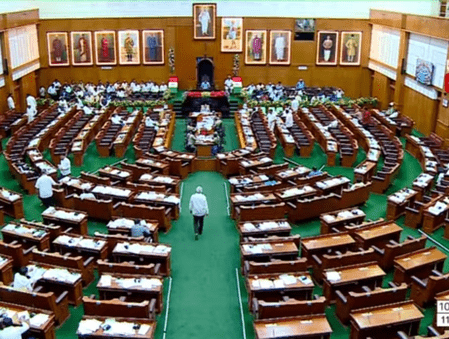
The Congress-led Karnataka government on Wednesday tabled the Karnataka Hate Speech and Hate Crimes (Prevention and Control) Bill, 2025 in the Legislative Assembly, triggering strong protests from BJP legislators. The Bill was introduced by State Law and Parliamentary Affairs Minister H.K. Patil, despite repeated objections from the Opposition.
As soon as the Bill was placed before the House, BJP members vocally opposed its introduction, alleging that it was unnecessary and politically motivated. When Speaker U.T. Khader put the Bill to a voice vote, he declared it tabled, inviting loud protests from BJP leaders who shouted that they would “never agree” to its introduction. The heated situation forced the Speaker to adjourn proceedings for 10 minutes.
The Bill, recently cleared by the Karnataka cabinet headed by Chief Minister Siddaramaiah, aims to curb hate speech, hate crimes and their growing impact on individuals, communities, and society at large. It outlines preventive measures and legal consequences for acts inciting hatred or causing harm based on religion, caste, race, community, sex, gender, sexual orientation, language, place of birth, residence, disability or tribe.
According to the draft, offences under the Bill will be non-cognisable and non-bailable, carrying penalties of up to three years’ imprisonment, a fine of up to Rs 5,000, or both. The cases will be tried before a first-class magistrate. The government has justified the proposed law on the grounds of rising communal tensions, especially following a series of revenge killings in Mangaluru that drew national attention. A special force has also been deployed to control potential violence, and dedicated wings are monitoring inflammatory social media activity.
BJP leaders, however, allege that the legislation targets Hindutva groups, particularly in sensitive coastal districts. Responding to these claims, Home Minister G. Parameshwara clarified that the Bill is not designed to target the BJP or any political party. “Governments change, but the law will remain,” he said, adding that the Bill only strengthens existing legal provisions to meet current needs.