Agartala, December 15:
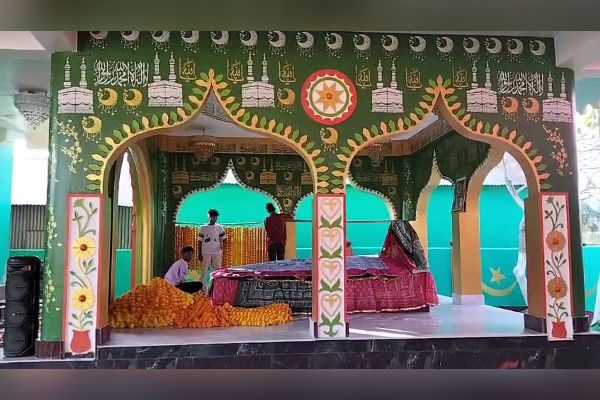
A nearly 400-year-old Muslim shrine on the outskirts of Tripura’s capital continues to serve as a beacon of communal harmony, attracting devotees from all faiths. Known as Gaji Babar Mazar, the revered dargah is located in Jaypur village under the Ramnagar area and was established in the Bengali year 1018.
For centuries, both Hindus and Muslims have visited the shrine seeking spiritual solace and divine blessings. Subal Das, a practising Hindu and president of the shrine’s managing committee, said the dargah represents unity beyond religious boundaries. “God may have different names and forms in different religions, but humanity binds us together. Here, people pray side by side for peace and wellbeing,” he said.
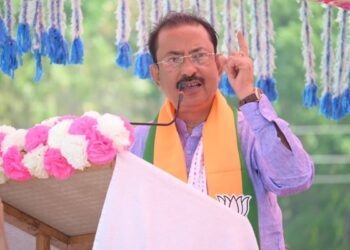
The annual fair and religious festival at the mazar will begin on December 16 and continue until December 19, drawing thousands of devotees from across Tripura. This year’s celebrations will also feature cultural programmes. Agartala Municipal Corporation Mayor and local MLA Dipak Majumder is scheduled to inaugurate the event.
As part of long-standing tradition, khichudi will be served to devotees. Das said that while food is prepared for all, separate arrangements are made for Hindus and Muslims to respect dietary practices. “We expect greater public participation this year,” he added.
Members of the managing committee noted that while the shrine has existed for centuries, efforts to formally expand the festival began around a decade ago. “Even when support was limited, public participation was overwhelming,” Das said.
Committee secretary Kamal Hossain traced the origin of the shrine to Saroj Fakir, who maintained it using alms from villagers. After his death, both communities jointly took responsibility for its upkeep. “Whether financial help or voluntary service, contributions come equally from Hindus and Muslims,” Hossain said.
He also recalled an incident where BSF personnel reportedly saw figures dressed in white at the shrine late at night, only for them to vanish upon approach—an occurrence that strengthened local faith.
Hossain added that the committee has never faced financial shortages. “Donations—flowers, rice, lentils—arrive regularly, sometimes even from unknown benefactors and from places as far as Kolkata,” he said.