Agartala, January 11:
The Tripura Pradesh Congress on Sunday launched a sharp attack on the BJP-led central government over the replacement of the Mahatma Gandhi National Rural Employment Guarantee Act (MGNREGA), alleging that the move reflects a deeper ideological hostility towards Mahatma Gandhi and his principles.
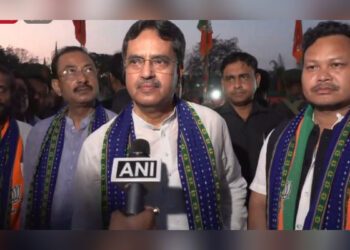
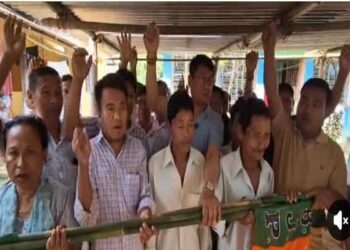
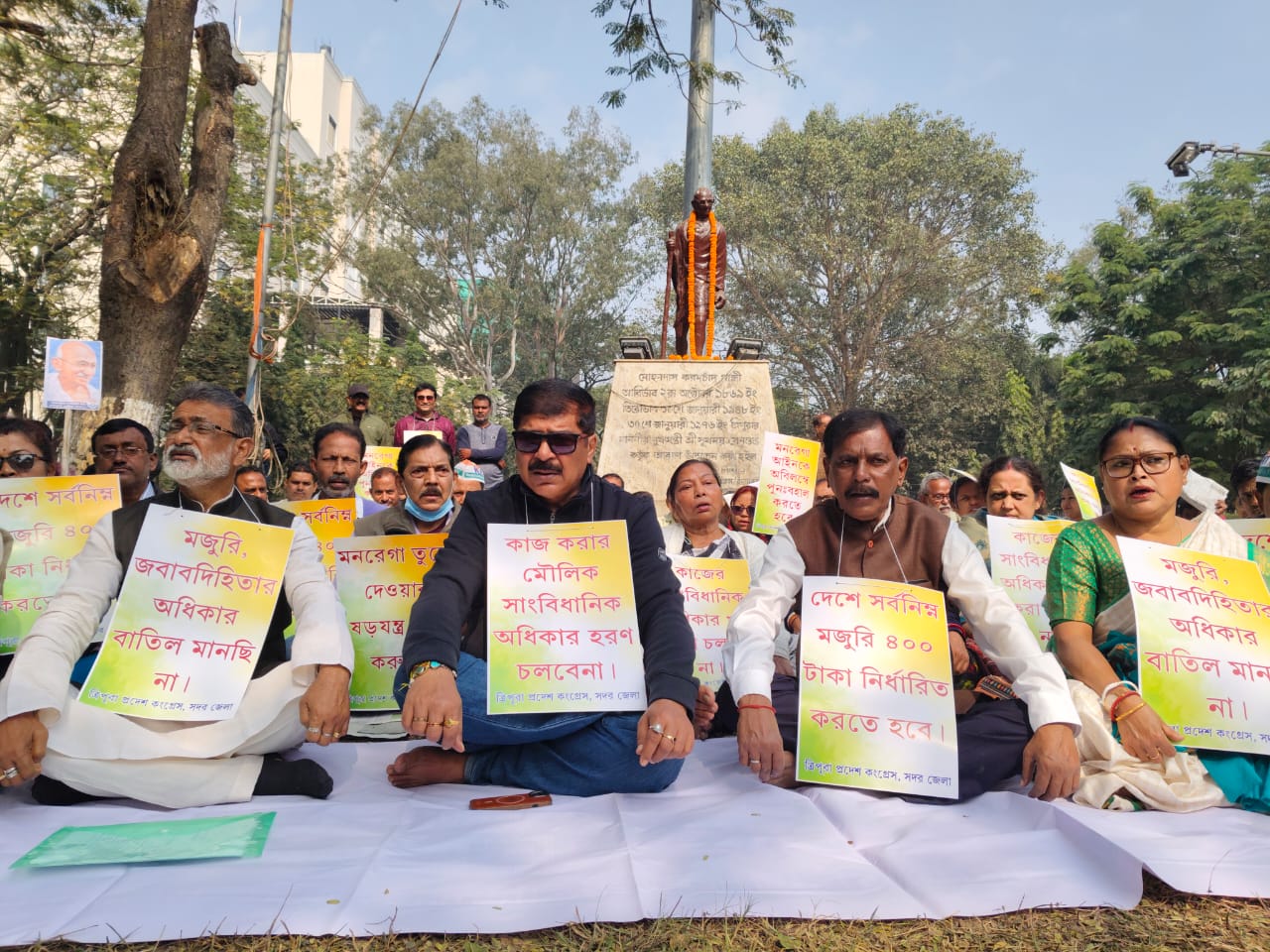
Addressing the media on the sidelines of a day-long hunger strike in Agartala, organised as part of the Congress’ nationwide ‘MGNREGA Bachao Sangram’, senior Congress leader and MLA Sudip Roy Barman said the dilution and replacement of MGNREGA was not a routine administrative reform but a direct assault on the legacy of the Father of the Nation.
Roy Barman, a former minister, drew a controversial parallel between the vandalism of Bangabandhu Sheikh Mujibur Rahman’s statues by fundamentalist forces in Bangladesh and what he described as “systematic efforts within India to erase Mahatma Gandhi’s legacy.”
“There is no difference between fundamentalist forces in Bangladesh and those operating in India when it comes to humiliating national icons,” he alleged. “While statues are destroyed there, here Gandhi’s most powerful legacy for the poor — the right to work — is being snatched away.”
He said MGNREGA, introduced during the UPA regime, was deeply rooted in Gandhian ideals such as dignity of labour, decentralised governance and empowerment of the rural poor. According to him, curtailing funds, reducing workdays and replacing the scheme with the VB-G RAM G Act amounted to an ideological attack on these core values.
Roy Barman further claimed that the new legislation centralises decision-making by allowing the Centre to decide where and to whom work will be provided, thereby weakening the role of panchayats and undermining the universal employment guarantee.
“This is not development; it is denial of rights through centralisation,” he said.
Questioning the government’s assurance of 125 days of employment under the new Act, he pointed out that even the guaranteed 100 days under MGNREGA were not fully implemented. Shifting 40 per cent of the financial burden to states, he warned, would only worsen rural distress.
The Tripura Congress demanded immediate repeal of the VB-G RAM G Act, restoration of MGNREGA in its original form, and an increase in minimum wages to ₹400 per day, asserting that the agitation would continue until “the right to work and Gandhian values are restored.”