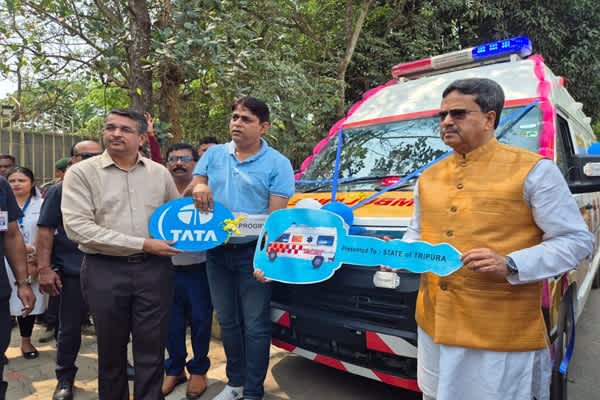
Agartala, March 15: In a significant step towards strengthening the state’s healthcare infrastructure, the Tripura government has introduced 24 new ambulances equipped with Basic Life Support (BLS) and Advanced Life Support (ALS) facilities to improve emergency medical services across the state.
Chief Minister Manik Saha flagged off the ambulances in front of his official residence in Agartala on Sunday. The initiative reflects the state government’s commitment to ensuring faster and more accessible medical response for citizens, particularly during emergencies.
Out of the newly introduced fleet, 20 ambulances will be deployed for trauma care services, while the remaining four will be integrated with the 102 emergency helpline under the Mother and Child Health programme. The project has been implemented at a cost of over Rs 5.04 crore and is expected to significantly strengthen patient transport and emergency response mechanisms across Tripura.
Speaking during the launch event, the Chief Minister said the government is continuously working to enhance healthcare services and ensure timely treatment for people in need. “Our government is committed to building a stronger, more accessible and faster healthcare system for every citizen. These ambulances will play a crucial role in saving lives during road accidents and other medical emergencies,” he said.
Dr. Saha further informed that trained healthcare personnel will be deployed with the ambulances to ensure professional medical care during transit. The vehicles are equipped with advanced life-support systems designed to provide critical care support to patients while being transported to hospitals.
The ambulances have been procured by the state Health and Family Welfare Department as part of efforts to strengthen emergency medical infrastructure in the state.
Officials noted that the new fleet will particularly benefit people living in rural and remote areas, where access to timely medical assistance is often limited. The addition of these ambulances is expected to enhance the state’s overall emergency response capacity and improve patient survival during critical situations.