Tripura BJP president Rajib Bhattacharjee on Sunday described Prime Minister Narendra Modi’s latest episode of Mann Ki Baat as a proud moment for the state, after the Prime Minister highlighted the growth and success of Tripura’s traditional bamboo industry.
Speaking to reporters after the 133rd episode, Bhattacharjee said the Prime Minister’s mention of Tripura reflects the state’s steady progress in both industrial and cultural spheres. “Once again, Tripura’s pride has found a place in the Prime Minister’s words. His remarks on the flourishing bamboo craft showcase the strength and potential of our traditional industries,” he said.
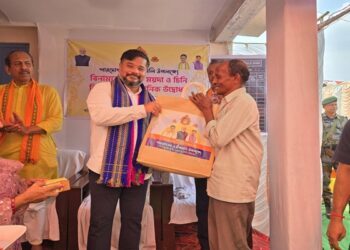
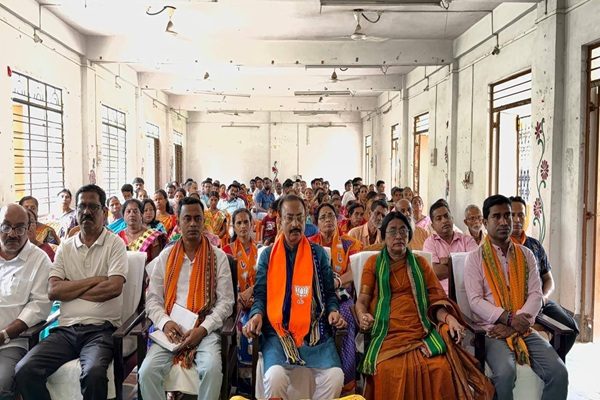
The broadcast was organised with enthusiasm by the Badharghat Mandal at Booth No. 24, held at the hall of Charipara School. The event witnessed strong participation from party workers, supporters, and local residents. Among those present were leaders including MLA Mina Rani Sarkar, Mandal president Manish Deb, and other party functionaries. Attendees listened attentively to the address, which held special significance for the state.
Bhattacharjee further noted that the Prime Minister’s recognition of two artisans from Tripura by name was a moment of immense pride. He said such acknowledgment would help bring greater visibility to the bamboo sector and inspire artisans to continue their work with renewed confidence. “This recognition will boost interest in bamboo craftsmanship and motivate those associated with this traditional livelihood. It is a major encouragement for our artisans,” he added.
He also expressed optimism that Tripura’s bamboo industry would now gain broader exposure at both national and international levels. According to him, the sector has the potential to contribute significantly to employment generation, rural development, and sustainable economic growth.
The programme created a vibrant and celebratory atmosphere in the locality, with organisers stating that participants felt inspired by the Prime Minister’s words. For Tripura, the focus on bamboo in Mann Ki Baat is being seen as both cultural validation and an economic opportunity, reinforcing the state’s growing role in India’s development journey.