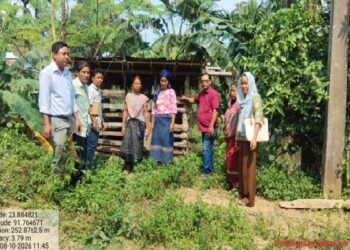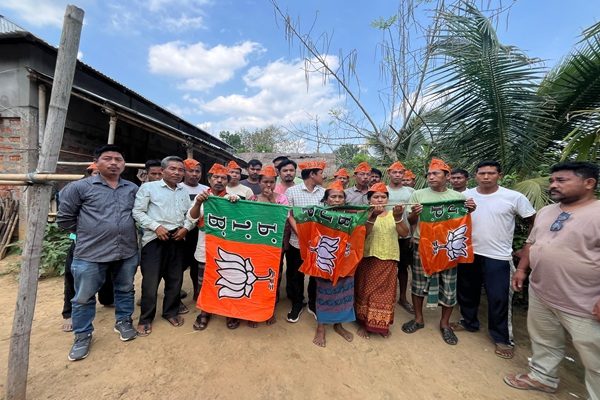
Agartala, April 7: In a significant political development at the grassroots level, a total of 15 voters from two families of Doang Mog Para under Bagmara Village Committee (VC) in the Kulai-Champahour constituency have extended their support to the Bharatiya Janata Party (BJP), leaving the Tipra Motha Party (TMP). The shift comes under the leadership of youth leader Khupso Halam, reflecting a growing trend of political realignment in the region.
According to local sources, the move is being seen as a reflection of increasing confidence among residents in the BJP’s governance and developmental initiatives. The decision by the families to switch allegiance is also being interpreted as an indication of the rising influence of youth leadership in shaping political preferences at the village level.
Khupso Halam, who played a key role in facilitating this transition, emphasized the importance of inclusive development and stable governance. He stated that the decision was taken after careful consideration of the benefits brought to the area and the aspirations of the younger generation. He further noted that more people, especially youths, are coming forward to support policies that promise long-term growth, peace, and opportunity.
The development highlights the evolving political dynamics in the Kulai-Champahour constituency, where local engagement and direct outreach are increasingly influencing voter behavior. Political observers believe that such grassroots-level shifts, though small in number, often carry symbolic significance and can have a ripple effect in nearby areas.
Residents of Doang Mog Para have reportedly expressed optimism about better access to development schemes, infrastructure improvements, and livelihood opportunities under the current dispensation. The emphasis on youth participation has also emerged as a key factor, with young leaders like Halam playing a crucial role in mobilizing support and bridging communication between the government and the people.
As Tripura continues to witness active political mobilization ahead of upcoming electoral contests, such developments underline the importance of local leadership and community-level engagement in shaping the broader political landscape.