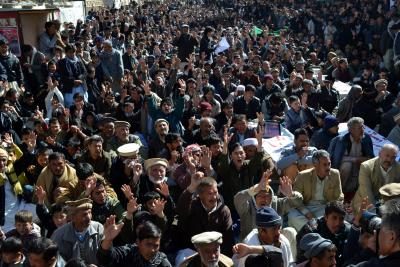
Islamabad, Jan 19: Hundreds of residents, political activists and traders staged a large protest rally in Panjgur town of Pakistan’s Balochistan province on Sunday, condemning the rising incidents of kidnapping for ransom and the worsening law and order situation in the region, local media reported.
The protest was organised on the call of the All Parties Citizen Action Committee of Makran (APCAM) following the kidnapping of prominent local figure Gul Jan Rind and several other residents in Panjgur district. According to Pakistan’s leading daily Dawn, protesters gathered at the main Bismillah Chowk in Panjgur before marching through key roads of the town, raising anti-government slogans and carrying placards highlighting their demands for security and justice.
The rally was led by APCAM Chairman Nawab Shambay Zai, BNP leader Mir Nazir Ahmed Baloch, National Party acting president Mujeeb Rehman, JUI Panjgur leader Hafiz Muhammad Azam Baloch, Haq Do Tehreek Panjgur leader Mullah Farhad, Jamaat-i-Islami leader Maulvi Noor, PML-N leader Ashraf Sagat and PPP Panjgur leader Javed Baloch, among others.
Addressing the protesters, the leaders urged the government and law enforcement agencies to take immediate and effective measures for the safe recovery of Shah Nawaz Gul and other kidnapped individuals. They questioned the performance of security agencies, asking why, despite access to modern technology, authorities had failed to trace the mobile phone numbers of the victims. The speakers also demanded the immediate arrest and prosecution of those involved in the kidnappings.
The protest comes amid growing concerns over enforced disappearances in Balochistan. On December 18, a leading human rights organisation, Baloch Voice for Justice (BVJ), raised alarm over the alleged enforced disappearance of two Baloch civilians. According to BVJ, Munib Baloch, a student and shop worker, and Mughfar Abid, a daily wage labourer, were taken from the main bazaar of Kharan city. The organisation described the incident as part of a “clear pattern of enforced disappearances” and demanded the immediate disclosure of the victims’ whereabouts, holding the state responsible for their safety.