Lisbon, January 18:
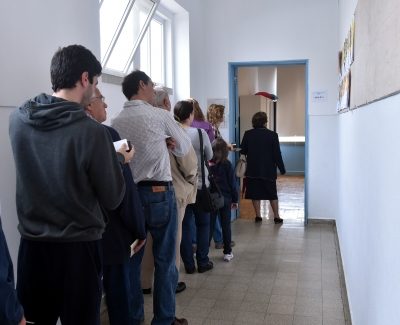
Voting for Portugal’s presidential election began on Sunday, with more than 11 million registered voters eligible to cast their ballots to choose the country’s next president from a record field of 11 candidates. Polling stations opened at 8:00 am and will close at 7:00 pm local time (0800–1900 GMT), with preliminary results expected to be announced later in the day, according to Xinhua News Agency.
Under the Portuguese Constitution, the president is elected through a direct popular vote. To secure victory in the first round, a candidate must obtain more than 50 percent of the valid votes. However, opinion polls and political analysts suggest that no candidate is likely to cross the required threshold this time, making a second-round runoff highly probable.
If a runoff is held, it would mark the first time in 40 years that Portugal’s presidential election proceeds to a second round. The runoff, scheduled roughly two weeks after the first round, would see the top two candidates compete, with the winner determined by a simple majority.
Recent surveys indicate that Andre Ventura, leader of the far-right Chega party, is currently leading the race. Other prominent contenders include Antonio Jose Seguro from the center-left Socialist Party, Joao Cotrim de Figueiredo of the Liberal Initiative, and Luis Marques Mendes representing the center-right Social Democratic Party. Additional candidates include Henrique Gouveia e Melo and several independents, making this one of the most competitive presidential races in recent decades.
Portugal has also seen strong participation in early voting. On January 11, more than 218,000 registered voters cast their ballots through the country’s early and mobile voting system. This flexible arrangement allows voters to vote at any designated polling station nationwide, one week ahead of the main election day.
Campaigning continued across the country until the final hours, with most candidate activities concentrated in northern Portugal. Outgoing President Marcelo Rebelo de Sousa, who is completing his second term, also voted early, saying he wished to promote awareness of flexible voting options. Voting in Portugal remains voluntary, not mandatory.