Dhaka, Jan 10: Despite its rapid expansion in size and population, Bangladesh’s capital Dhaka has failed to evolve into a modern and liveable city, instead reflecting what a report describes as a fragile and poorly managed economic geography. A detailed analysis published on Saturday by leading Bengali daily Prothom Alo paints a grim picture of a city overwhelmed by unplanned growth, inadequate infrastructure, and chronic governance failures.
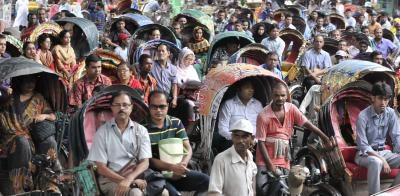
The report notes that although Dhaka has grown swiftly over the past few decades, the expansion has been largely disorderly. Transportation remains a major source of daily hardship for residents, while housing shows little evidence of systematic planning. Basic civic services such as electricity, water, and gas are described as unreliable and poor in quality. The city also suffers from a severe lack of green spaces and pavements, compounding the problems of air and noise pollution that dominate everyday life.
According to the report, Dhaka is increasingly turning into a “city of slums,” with informal settlements spreading across the capital. These areas frequently come into focus during eviction drives or after devastating fire incidents. While urbanisation has significantly reshaped the city’s demography, the report highlights a lack of attention to living conditions, work environments, social cohesion, and the formation of sustainable communities.
Serious social challenges persist alongside infrastructural decay. The report points to high rates of child marriage, widespread child malnutrition, low educational attainment, elevated crime levels, and limited access to healthcare, particularly for the urban poor.
Citing the Economist Intelligence Unit’s Global Liveability Index published in July 2025, the report notes that Dhaka ranked 171 out of 173 cities worldwide, performing poorly across indicators such as stability, healthcare, education, environment, and infrastructure. The capital also frequently features among the world’s most polluted cities in global air quality rankings.
Additionally, residents live under constant threat of flooding due to inadequate drainage systems and poor waste management. Year-round construction fills the city with dust, adding to its bleak appearance. Poverty, inequality, a strained healthcare system, and weak governance, the report concludes, have collectively made Dhaka a densely packed, sluggish, and increasingly unliveable metropolis.