Dhaka, Jan 2:
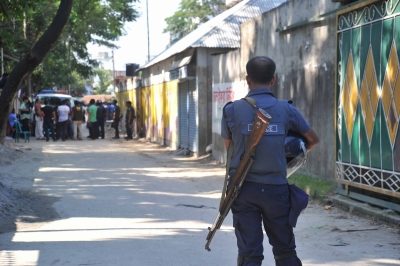
A leading human rights organisation in Bangladesh has raised serious concerns over a surge in violence across the country in 2025, encompassing political clashes, electoral unrest, mob attacks, lynchings, harassment of journalists, extrajudicial killings, and crimes against women and children.
In its latest report, the Human Rights Support Society (HRSS) documented 292 incidents of mob violence and lynching, resulting in 168 deaths and 248 injuries. These attacks were reportedly triggered by allegations of theft, robbery, snatching, dominance assertion, and alleged religious defamation.
Political violence also claimed a heavy toll last year, with 133 fatalities and 7,511 injuries in 914 reported incidents. The HRSS attributed this unrest to struggles for political dominance, retaliatory attacks, disputes over committee formation, election-related conflicts, extortion, and occupancy disputes. Ahead of Bangladesh’s 13th national parliamentary election in February, 54 election-related incidents resulted in three deaths and 494 injuries.
Journalists faced unprecedented threats, with 539 killed, injured, assaulted, or harassed in 318 incidents. Among these, three journalists were killed, 273 injured, 57 assaulted, 83 threatened, and 17 arrested, while 107 journalists were implicated in 34 cases.
The report also highlighted extrajudicial killings and custodial deaths, revealing that 40 people were killed by law enforcement operations, 10 died while fleeing police or due to illness, and 92 individuals—including 30 convicts and 62 undertrial detainees—died in jail custody due to illness, suicide, or torture.
Crimes against women and children were particularly alarming. In 2025, 2,047 women and girls experienced violence, including 828 raped (474 of them children), 179 gang-raped, and 28 murdered after rape. Domestic abuse, dowry-related killings, and sexual harassment also contributed to this toll. Among children, 1,371 were abused, with 288 fatalities.
HRSS Executive Director Ijajul Islam urged coordinated action by authorities and society to reinforce the rule of law, democratic processes, and human rights protections. “Without addressing mob violence, custodial deaths, political tension, election-related violence, and restrictions on free expression, the human rights situation could deteriorate further,” he warned.
The report underscores growing law and order challenges in Bangladesh since the Muhammad Yunus-led interim government assumed power, raising alarms over the country’s human rights landscape.