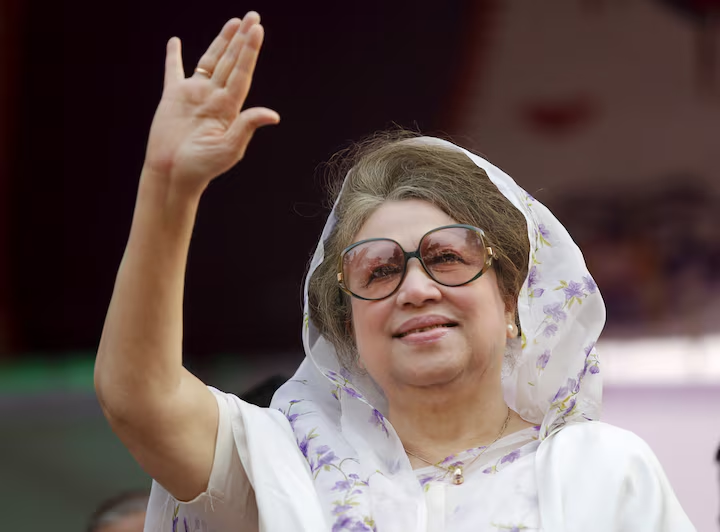
Bangladesh’s first female prime minister, Khaleda Zia, has died at the age of 80 after a prolonged battle with multiple health complications, her political party, the Bangladesh Nationalist Party (BNP), announced on Tuesday. Reuters+1
Zia, a towering figure in Bangladesh’s political landscape for decades, passed away early Tuesday morning at Evercare Hospital in the capital, Dhaka, where she had been receiving medical care. Her doctors had reported that she was suffering from advanced cirrhosis of the liver, arthritis, diabetes, and ongoing chest and heart problems. Al Jazeera
Born into a politically influential family, Khaleda Zia rose to national prominence following the assassination of her husband, President Ziaur Rahman. She served as prime minister during multiple terms and became a central leader of the BNP, shaping the country’s political dynamics through the 1990s and 2000s. Her leadership marked a historic moment for Bangladeshi women in politics as she became the first woman to hold the nation’s highest government office. The Economic Times
In recent weeks, Zia’s health had sharply deteriorated, drawing widespread concern both domestically and internationally. Medical reports detailed her critical condition, with prolonged hospitalisation and ventilator support in place as her medical team sought to manage her complex health issues. The New Indian Express The BNP had called on supporters and citizens to pray for her recovery amid growing fears for her life.
Khaleda Zia’s death marks the end of a significant political era in Bangladesh. For decades, she was a central figure of opposition politics, known for her fierce rivalry with former Prime Minister Sheikh Hasina. Their political competition defined much of Bangladesh’s modern political history, often polarising public opinion. The Times of India
Her passing is expected to have profound implications for the BNP and the broader political landscape in Bangladesh, particularly with national elections approaching. Tributes have begun to pour in from political leaders, supporters, and international observers, remembering Zia’s contributions to her country and her role as a pioneering female leader.