Washington, Dec 3:
A new report has revealed that the decades-old insurgency in Pakistan’s largest and resource-rich province, Balochistan, continues to be driven by long-standing demands for greater political autonomy, equitable resource control and an end to systemic marginalisation. The report, published by American outlet PJ Media, states that economic exploitation and political repression by Pakistani authorities have intensified resentment among the Baloch population.
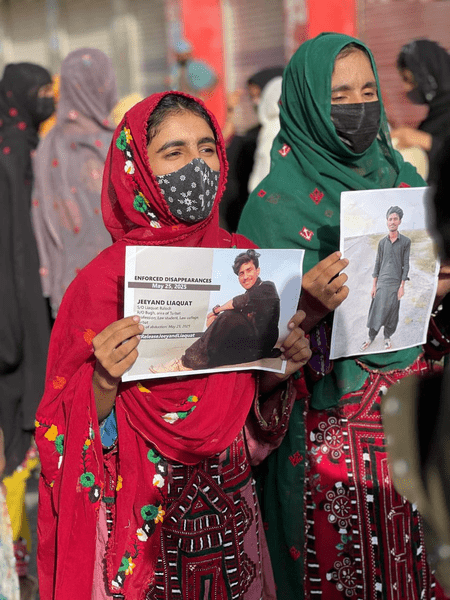
The report underscores that for years, Pakistani security agencies in Balochistan have been accused of grave human rights violations, including extrajudicial killings and widespread enforced disappearances. Activists claim that thousands of ethnic Baloch have gone missing over the last two decades, often taken without legal process. Many are allegedly tortured, killed or found buried in unmarked graves, while others who return after years of captivity bear deep traumatic scars.
The crisis has sparked unrest even in the federal capital. At Islamabad’s Quaid-i-Azam University (QAU), students recently staged a sit-in protest demanding the recovery of Saeedullah Baloch, a sixth-semester student reportedly abducted on July 8. Witnesses told the Baloch Students Council (BSC) that unidentified men in civilian clothes, accompanied by law enforcement personnel, forcibly removed Saeedullah and a friend from a public bus at the Islamabad Toll Plaza. Following the protests, QAU authorities suspended academic activities fearing escalation.
Despite 16 years of continuous demonstrations, rallies and sit-ins, the Voice for Baloch Missing Persons (VBMP) says enforced disappearances persist. VBMP Chairman Nasrullah Baloch, addressing a press conference on November 16, urged the Pakistani state to recognise that force, abductions and extrajudicial killings will not stabilise Balochistan. He reiterated that the crisis is political in nature and requires political dialogue.
Although Pakistan established a Commission of Inquiry on Enforced Disappearances in 2011, the body has been widely criticised for its limited scope, weak safeguards and failure to hold perpetrators accountable. According to PJ Media, not a single individual has been punished, and there is no legal provision for families to seek compensation, leaving victims without justice or closure.