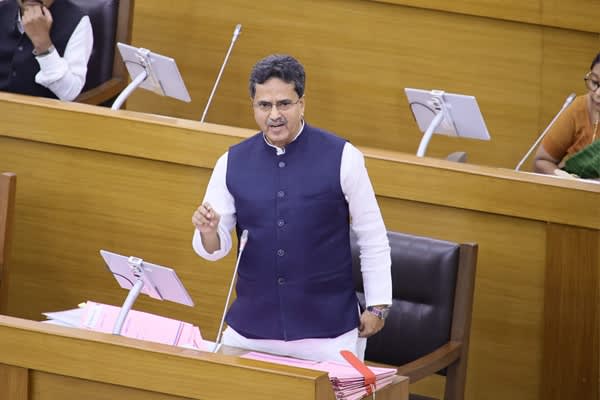
Agartala, March 23: Chief Minister Manik Saha on Monday placed the state’s fight against narcotics at the centre of discussions in the Assembly, emphasizing his government’s commitment to strict legal action and stronger institutional mechanisms to curb drug-related crimes.
Responding to queries raised by Congress MLA Sudip Roy Barman, Dr. Saha presented detailed data to highlight the progress made in tackling narcotics cases. According to the figures, nearly 1,100 accused persons completed trial between 2023 and 2025. Convictions saw a steady rise during this period, increasing from 16 in 2023 to 60 in 2025, indicating a sharper focus on enforcement and prosecution.
He noted that courts have awarded sentences ranging from six months of simple imprisonment to rigorous imprisonment of up to 20 years, depending on the severity of the offences. This, he said, reflects a tougher stance by both law enforcement agencies and the judiciary in dealing with narcotics-related crimes.
The Chief Minister also highlighted that the state government has actively pursued appeals in cases where accused persons were acquitted. Several such cases have been taken up in higher courts, with some being remanded for retrial by the High Court. This approach, he asserted, underscores the administration’s determination to ensure accountability and prevent offenders from escaping justice on technical grounds.
Strengthening institutional capacity has been another key focus. Dr. Saha announced the formation of a dedicated Anti-Narcotics Task Force, comprising specially trained personnel to handle drug-related cases more effectively. In addition, regular training programmes are being conducted for investigating officers to improve the quality of evidence collection and prosecution.
“Tripura will not tolerate drug trafficking. We are committed to ensuring that offenders face justice while continuously enhancing the capabilities of our enforcement agencies,” the Chief Minister said.
Observers believe that by foregrounding conviction data and institutional reforms, the government is positioning its anti-drug campaign as both a law-and-order priority and a significant governance achievement.