Kathmandu, Dec 7:
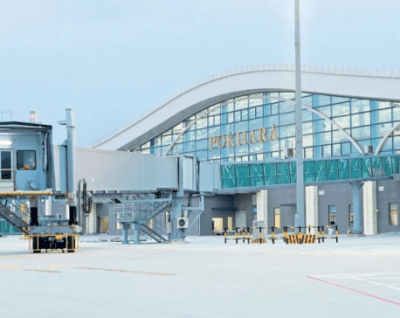
Nepal’s anti-graft body, the Commission for the Investigation of Abuse of Authority (CIAA), on Sunday filed corruption cases against 55 individuals — including five former ministers, several former government secretaries, and a Chinese construction company — over alleged irregularities in the construction of the China-funded Pokhara Regional International Airport.
The long-controversial airport project, constructed by China CAMC Engineering Co. Ltd., has faced persistent allegations of inflated project costs and mismanagement. The CIAA has estimated a financial loss of USD 74.34 million (NPR 8.36 billion), leading to the registration of cases in the Special Court. Among the accused are former ministers Post Bahadur Bogati (deceased), Ram Sharan Mahat, Deepak Chandra Amatya, Ram Kumar Shrestha, and Bhim Prasad Acharya. Mahat had served as finance minister during the period of the alleged corruption, while the others were tourism ministers.
High-ranking former bureaucrats, including former Supreme Court registrar Ramkrishna Timilsena, Sushil Ghimire, Suman Sharma, Bheshraj Sharma, Sureshman Shrestha, and Madhukumar Marasini, have also been named as defendants. Suspended CAAN Director General Pradip Adhikari and former CIAA director Murari Bhandari — already implicated in a separate heliport construction case — were included as well.
The Chinese contractor CAMC Engineering, along with its chairman Wang Bo and regional general manager Liu Shengcheng, has been charged with allegedly inflating the project’s cost during the procurement process. The airport was built under a USD 215.96 million loan from China’s Exim Bank, but its inability to attract major international airlines has raised concerns about Nepal’s capacity to repay the loan.
Despite its inauguration on January 1, 2023, Pokhara International Airport currently hosts only one scheduled international service — a weekly Pokhara–Lhasa flight operated by Himalaya Airlines, a Nepal–China joint venture.
Earlier government studies revealed flaws in the airport’s physical layout and navigational design, including a steep five per cent climb gradient for missed approach procedures and runway-length limitations. These issues impose load penalties on medium-haul aircraft, increasing operational costs and further deterring airlines from using the airport.