Colombo, Dec 2 — India has ramped up its humanitarian assistance to Sri Lanka under Operation Sagar Bandhu as the island nation continues to battle widespread devastation caused by Cyclone Ditwah. On Tuesday, an Indian Air Force (IAF) helicopter delivered essential relief supplies to Poramadulla in Kandy district and airlifted personnel from Nuwara Eliya to strengthen ongoing response operations.
The Indian High Commission in Sri Lanka said in a post on X that IAF IFC 1885 had transported relief materials and personnel to critical locations, reinforcing ground capabilities where support was urgently needed.
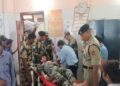
IAF helicopters also executed multiple life-saving evacuations. A cardiac patient was airlifted from Irunguwatta, while a pregnant woman and her children were rescued from Kotmale and safely transported to Colombo. Essential supplies were further delivered to Mandaram Nuwara as part of the continued relief push.
Expanding its operations, the IAF transported 2,000 kg of relief materials to Mandaram Nuwara, evacuated 17 people including a heart patient to Matale, and rescued 24 individuals—among them a pregnant woman and five children—from Kotmale.
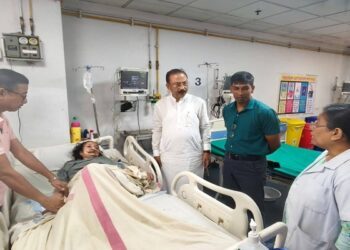
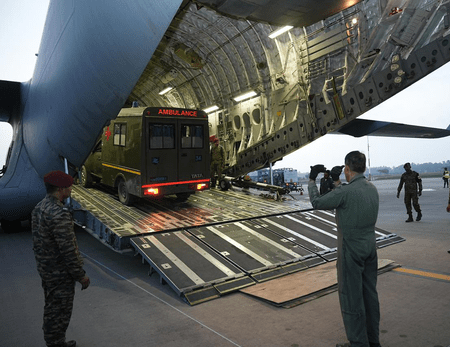
External Affairs Minister S. Jaishankar confirmed the arrival of an IAF C-17 transport aircraft in Colombo carrying a modular field hospital, over 70 medical and support personnel, and necessary vehicles. Another C-17 flight airlifted a Para Field Hospital from Agra with 73 medical staff to aid ongoing operations. Meanwhile, IAF Mi-17 helicopters transported more than eight tonnes of relief supplies and evacuated 65 survivors, including foreign nationals and critically ill patients.
Two rapidly deployable Field Hospitals have also been sent by India to support healthcare needs in disaster-hit areas.
Sri Lanka’s Disaster Management Centre reported that the death toll from Cyclone Ditwah has risen to 410, with 1.4 million people affected across the country due to floods and landslides.
India’s High Commissioner Santosh Jha visited Sedawatta near Colombo to review NDRF operations, where teams continue door-to-door evacuations and distribution of relief in areas submerged under 6 to 8 feet of water.