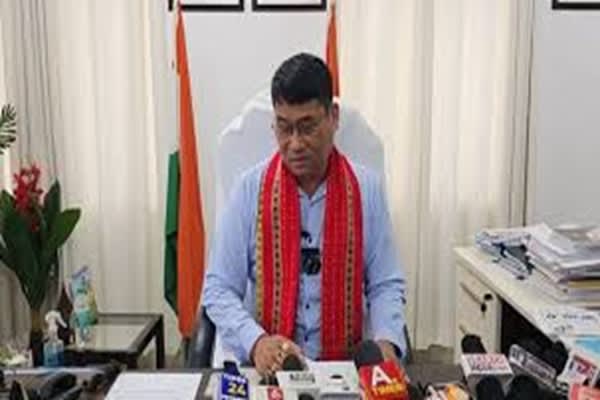
Agartala — Tribal Welfare Minister Bikash Debbarma on Friday assured urgent measures to address long-standing complaints of poor infrastructure and drinking water shortages in non-tribal dominated areas where several tribal families reside.
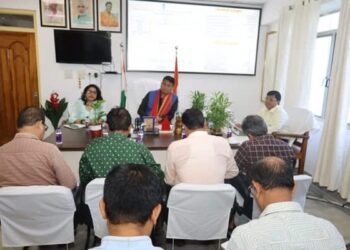
A delegation from Ultacherra and Kalajhari villages in the 44 Raima Valley, including residents of a Bru refugee rehabilitation centre, met the minister at his official residence to highlight their grievances. They alleged that despite decades of governance under the Left Front and five years of the present ADC administration, essential services such as potable water, motorable roads and proper drainage systems remain severely inadequate.
Villagers informed the minister that damaged roads and the absence of safe drinking water have made daily life extremely difficult. During the monsoon season, flooded and muddy pathways cut off access to schools, markets and health centres. Many families depend on distant tube wells or nearby streams for drinking water, raising concerns about waterborne diseases and public health.
After hearing the delegation, Debbarma directed officials to take immediate steps to assess the situation and initiate corrective measures. “Politics should not be built on people’s deprivation. Development must rise above party lines. Providing lasting solutions to those who have been denied basic rights for years is our priority,” he said.
The minister also criticised certain political leaders for allegedly exploiting tribal sentiments without ensuring tangible development. He remarked that in Bru rehabilitation centres and other areas, genuine concerns were often sidelined in favour of emotional rhetoric.
Administrative sources later confirmed that urgent field surveys will be conducted to prepare proposals for improving drinking water supply and repairing internal roads in the affected villages.
Residents, however, remain cautiously hopeful, awaiting concrete action to bring long-awaited relief.