Agartala, Feb 7:
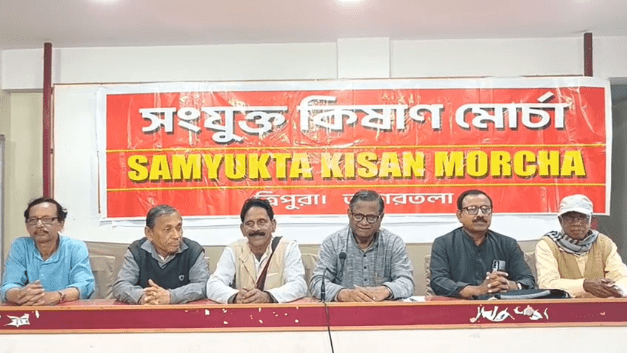
The state committee of the Samyukt Kisan Morcha (SKM) on Saturday launched a sharp attack on the Narendra Modi-led Central government over the recent trade agreement with the United States, alleging that the deal compromises the interests of Indian farmers and favours American corporate and imperial interests.
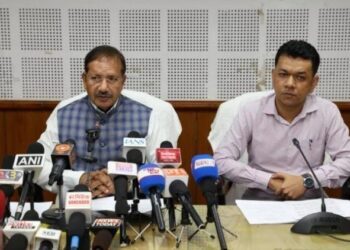
Addressing a press conference in Agartala, senior Left farmers’ leader and former minister of the erstwhile Left Front government, Pabitra Kar, accused the Centre of “selling out” the farming community by agreeing to a zero-percent import tariff on American goods, particularly agricultural produce. He warned that such a move would severely impact domestic farmers, who are already struggling with rising input costs and uncertain market prices.
Kar announced that the SKM state committee would join the nationwide general strike scheduled for February 12. As part of the protest, mass demonstrations will be organised across the state, including the burning of effigies of Prime Minister Narendra Modi and former US President Donald Trump. He further stated that a separate agitation would be launched on February 11 to specifically oppose the trade agreement.
According to Kar, the trade deal directly contradicts earlier assurances given by Prime Minister Modi, who had repeatedly claimed that his government would safeguard farmers’ interests. “Today, those promises lie in tatters,” he alleged, accusing the Prime Minister of surrendering to pressure from Washington and opening Indian markets to heavily subsidised American agricultural products.
The SKM leader argued that Indian farmers cannot compete with US farm goods that receive massive government subsidies, and warned that the agreement could lead to falling crop prices, loss of livelihoods and increased agrarian distress. He said the deal reflects the Centre’s pro-corporate policies and disregard for the concerns of small and marginal farmers.
Reiterating SKM’s resolve, Kar called upon farmers, agricultural workers and the general public to unite against what he termed “anti-farmer and anti-national policies,” and to participate actively in the upcoming protests to defend the rights and future of India’s farming community.