New Delhi, Dec 3:
A rising outcry over the alleged mistreatment of jailed former Prime Minister Imran Khan has added fresh volatility to a nation already grappling with multiple uprisings and a severe financial crunch. Khyber Pakhtunkhwa (KP), bordering Afghanistan, is witnessing renewed tribal unrest and insurgent activity, while discontent continues in Pakistan-occupied Jammu and Kashmir and Balochistan, where residents are protesting repression, demanding basic services, and in some cases calling for secession.
Pakistan’s relationship with the Taliban-ruled Afghanistan has further deteriorated. The militia once nurtured by Islamabad now controls Kabul, responding to Pakistani actions with counter-aggression. The border remains tense, with trade suspended for almost two months.
Compounding the political turmoil is Pakistan’s mounting debt. As of June 2025, total public debt has reached nearly USD 287 billion, a 13 per cent increase over the previous year. A rising debt-to-GDP ratio of about 70 per cent, expanding domestic liabilities and growing external debt have placed Islamabad in a dangerous fiscal bind. With low reserves and weak growth, Pakistan is relying on an IMF-backed bailout supported by China, Saudi Arabia, and the UAE, alongside short-term disbursements and restructuring talks.
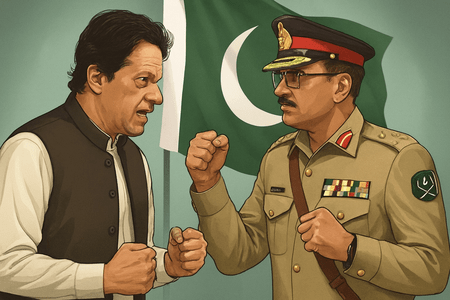
The dispute between Imran Khan’s family and the federal administration has now escalated into mass protests. Reports surrounding Khan’s prison conditions triggered widespread anger directed particularly at Army Chief Asim Munir. KP, Khan’s stronghold, has become the centre of mobilisation through coordinated protests, legal petitions and public messaging. The intensity of demonstrations has pressured the federal government to consider extreme measures, including central rule in the province.
Nationwide restrictions on gatherings, curfews, and heavy security deployments have fuelled PTI claims of repression, turning the confrontation into a high-stakes political battle. The crisis highlights Pakistan’s deeper structural fault lines—especially the unresolved tension between civilian leadership and military power—now amplified before both domestic and international audiences.